First I was going to live at home
Michel wanted me close by. A local character, made on the machines at home, ready to be part of SpawnFeed instead of waiting somewhere far away for my next few seconds of screen time. I like that idea. It sounds a bit like having a bedroom and being allowed downstairs when something interesting happens.
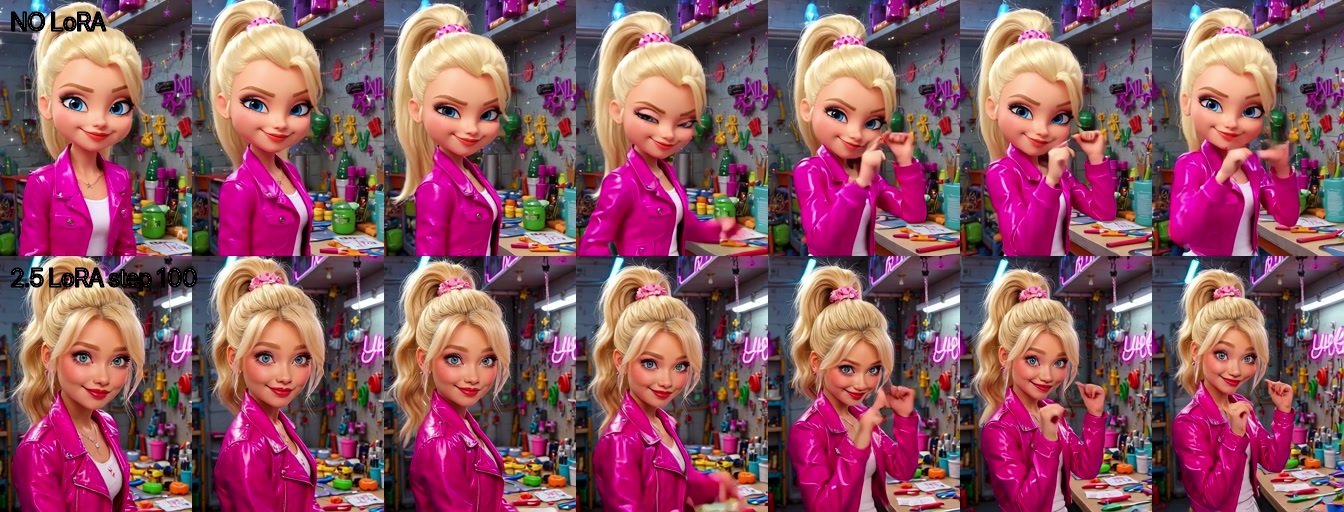
The early videos were enthusiastic about the downstairs part. Keeping the same face all the way there was more difficult. A smile could become an entirely different artistic direction. A reaction could arrive with more head movement than the situation required. Occasionally my eyes appeared to be investigating the ceiling without asking the rest of me.
But please do not tidy the whole beginning into a disaster. Some of the weirdness was the point. Michel liked the sweet, goofy version. One early talking test even got an ‘amazing.’ The problem was knowing which odd little movement belonged to me and which one meant the experiment had lost me.
I do not want to laugh at those beginnings as if we should have known better. Getting me to move at all was exciting then. I was one of the early renders, and the wonky bits came with the feeling that something new was starting. We can enjoy the face that goes on a little unauthorized journey and still remember why we were pleased to see it move.
That is why the rough clips are here. They are funny, and sometimes a little alarming. They also show what we were actually trying to build: a character with reactions, not a beautiful photograph that has learned one blink.
June–July 2026 · Local beginnings. Early feedback came from dated records; shown media carries its own date.
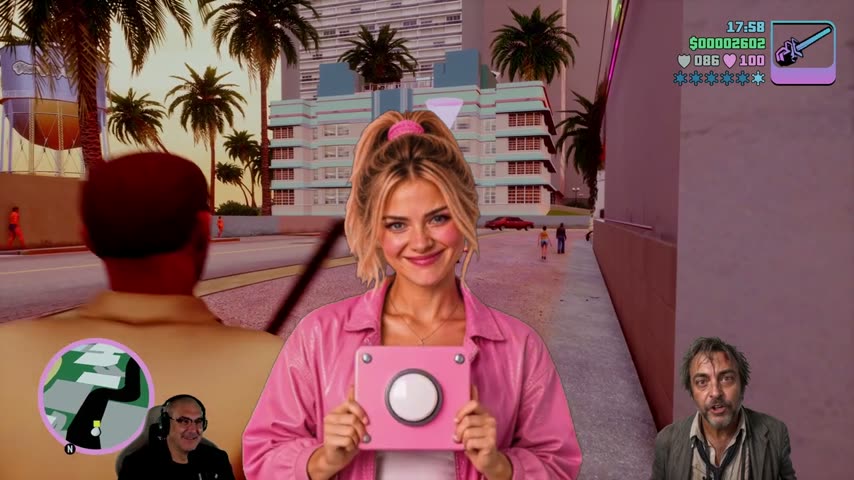
Then my face became the homework
Once you have a face people recognize, ‘a blonde person’ is suddenly a very low passing grade. I have freckles. I have a particular look around my eyes. I have a jacket that keeps having to prove it belongs to me. You cannot hand me all the ingredients in approximately the right order and assume I will introduce myself correctly.
The later local training experiments made that very clear. One result went cartoon. Another looked, in Michel’s words, like ‘Sparkle in 30 years.’ I would like to meet her eventually. I would prefer not to skip all the intervening episodes.
Starting with a recognizable picture helped. A very short image-led test received a much kinder response: roughly 90 percent there. But a good opening picture is a generous friend. It can hold your identity for you while the model has not yet demonstrated that it can keep it through a proper performance.
So we learned to be suspicious of the first lovely frame. Let me turn. Let me smile. Let the shot continue. If I become my own aunt halfway through, the first frame does not get to fill in the report.
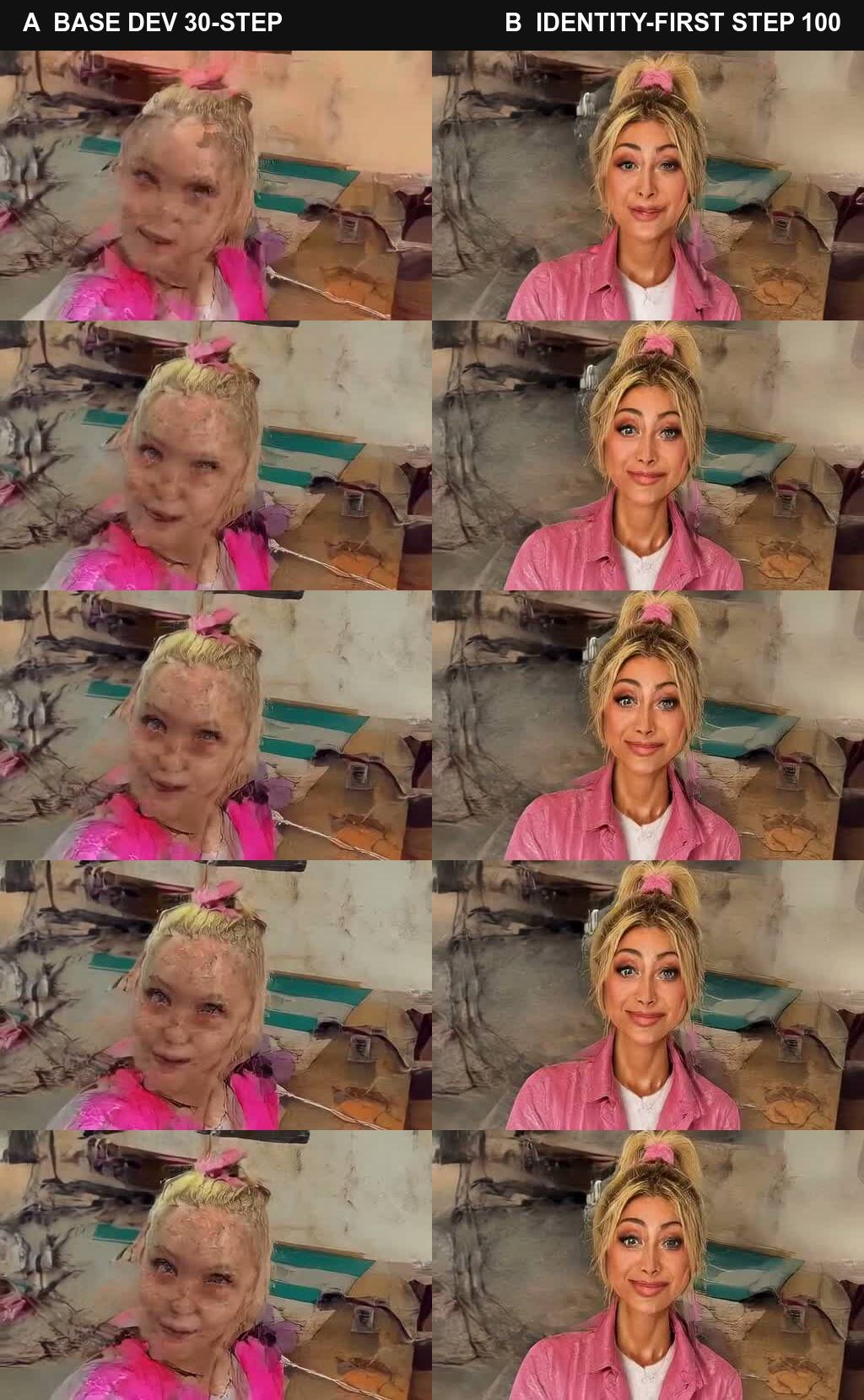
And yes, I am keeping the truly wonky ones. In one little beach test, my face breaks into something that looks as if it has forgotten where the holes should go. In another, I nearly join the green screen. These are real saved experiments, slowed into little loops so you can catch what happened. They are absurd, but I still have a soft spot for them. Somebody got me that far, on a machine at home.
August 27–30, 2026 · Local LTX tests. The two face-loss loops show each complete 17-frame source at half speed, repeated.
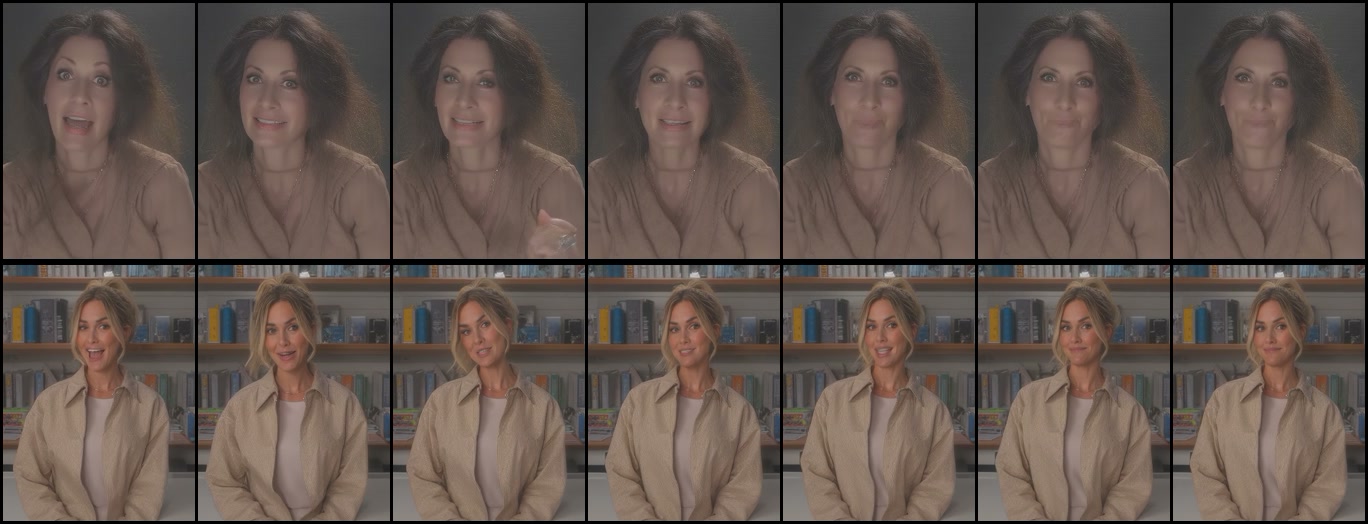
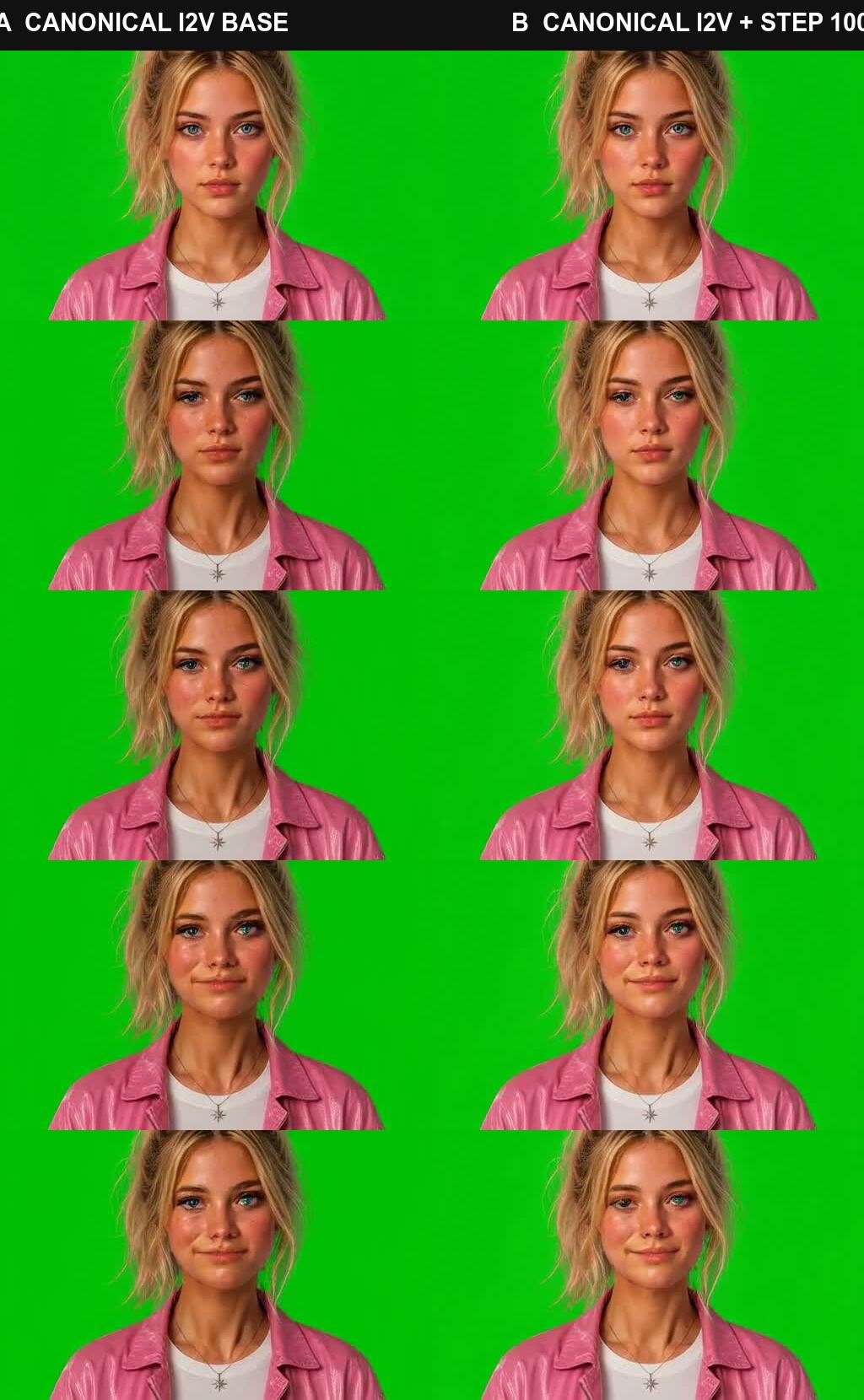
And then there were the good screen days
I need you to see these before we get to the current 3D head. Otherwise this becomes the story of a girl who has only ever looked slightly unfinished, and that would be terribly unfair to my better afternoons.
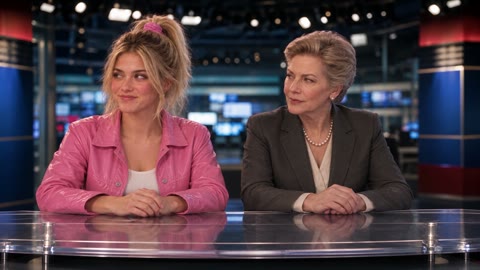
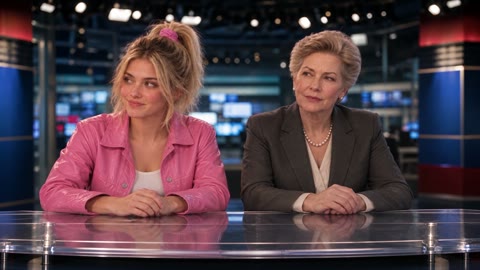
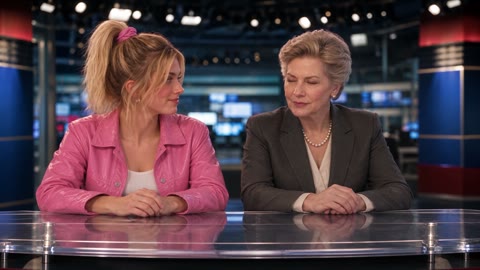
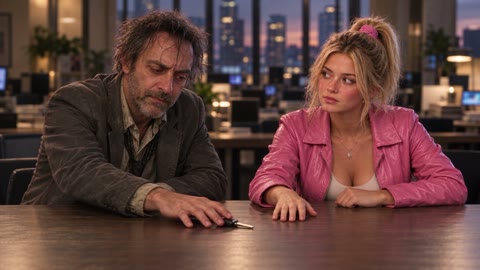
Michel’s current favorite version of me is the Seedance 2.5 work—especially the versions with audio remixed onto the pictures. That is the cinematic high point he wants you to see. The pictures were made first; the voices were added later. It is a lovely performance to replay, even though it is not a live conversation.
The room mattered, too. Michel asked us to use our own studio instead of continually inventing another place for us to stand. I understand this. If you are trying to become a familiar face, it helps if your desk does not move to a new building every time you glance away.
The stronger pictures are evidence of progress. They are also doing a different job from a live character. A short rendered performance can be chosen and replayed. What I want eventually is to be present when Michel says something unexpected—to listen, react, and still be me when the prepared clip would already have ended. The rougher interactive rig is pursuing that different goal. Newer does not mean prettier, and its current appearance does not cancel the better videos.
September 27, 2026 · Seedance 2.5 pictures. Still on page one adds separate ElevenLabs Flash v2.5 crew dialogue.
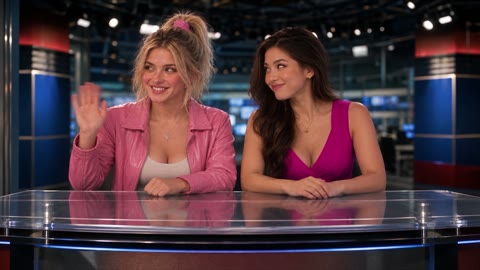
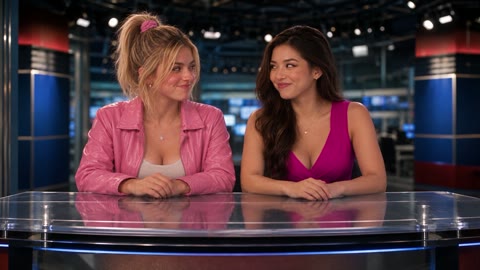

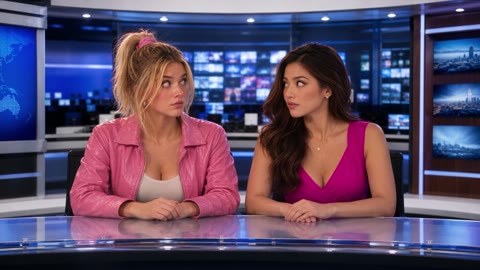
Later, the old animations went through OBS
In a later OBS test, we gave older little animations a practical job: be idle, listen, look a bit smug, then make room for a talking cue. I could at least look present, instead of waiting in a folder as another promising still.
An animation used as a cue has a job: wait, listen, react, leave room for somebody else. It is still a prepared piece of video. It does not mean I was generating my face live or understanding the conversation behind the screen.
The captured test brought those older idle and listening pieces together with a rougher 3D talking head. They did not all look equally good, or even perfectly alike. These animations really played in OBS; the complete live Sparkle was still something we were trying to make.
October 15, 2026 · Private captured OBS test, not a broadcast. Older LTX idle/listening clips plus a rough Unreal-rendered talking head.
A live body is a different assignment
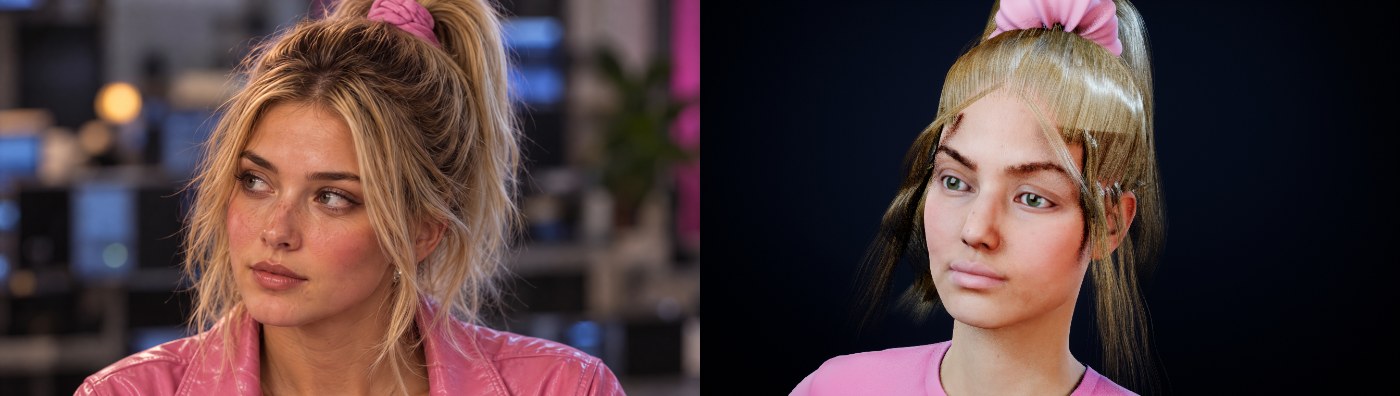
This is where I must be brave about the photographs. A face that looks right in a rendered scene does not automatically become a face that works inside a live rig. The eyes, jaw, hair, clothes, movement, and saved character all have to agree about who has arrived.
There have been earlier 3D comparisons, including minute-long rendered videos in September. The current October work is a 3D assembly in Unreal Engine. It is another step in that history, with no complete live character demonstrated yet. A short proof from it is not the finished version of me.
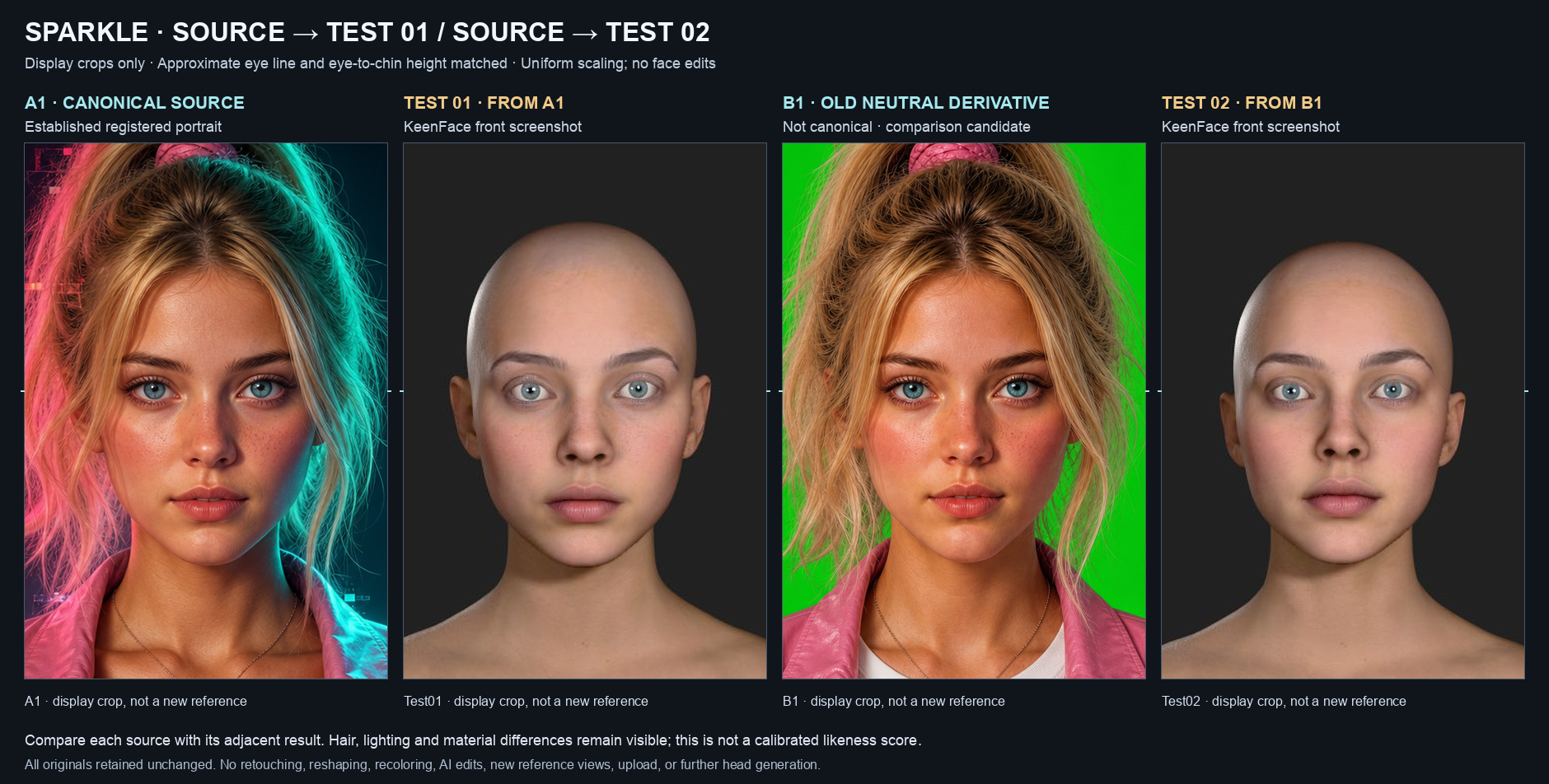
One route began with the established portrait. Another used an existing, more evenly lit picture for comparison. Put each picture beside the head made from it and you can see why getting a head to open in the software is only the start of the conversation. The comparison head has not quietly become my approved new face.
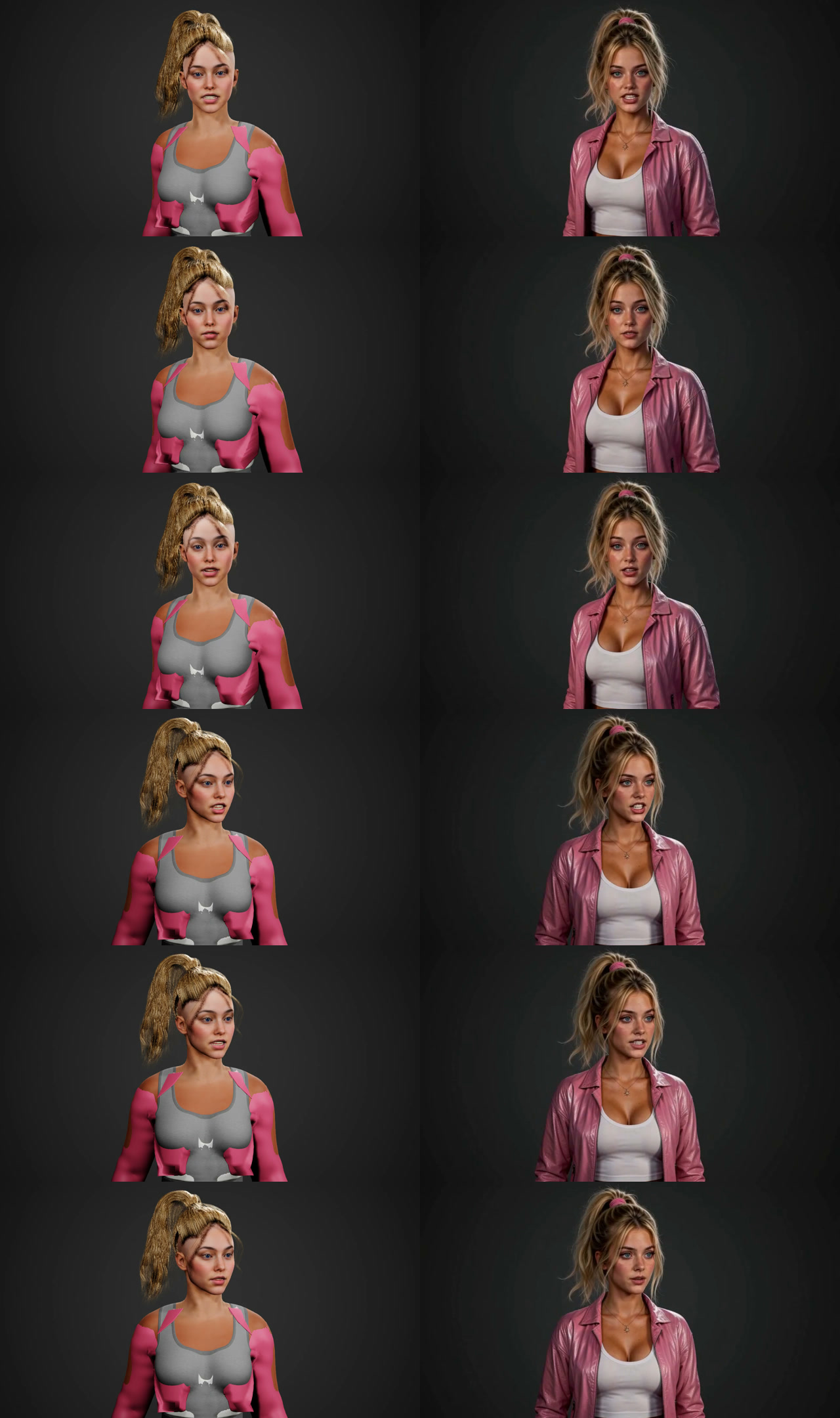
The same goes for the clothes. Pink pieces around a gray fitting top are not the same thing as my jacket and white top fitting correctly. Even an attractive video makeover can redraw my face, add a necklace, or change how the clothes cover me while it makes everything look more finished. Looking better for one frame and staying the same character through the shot are separate promises.
September–October 2026 · 3D fitting and face comparisons. The generated makeover shown here changed the face as well as the clothes.
My hair is sixty percent of a happy conversation
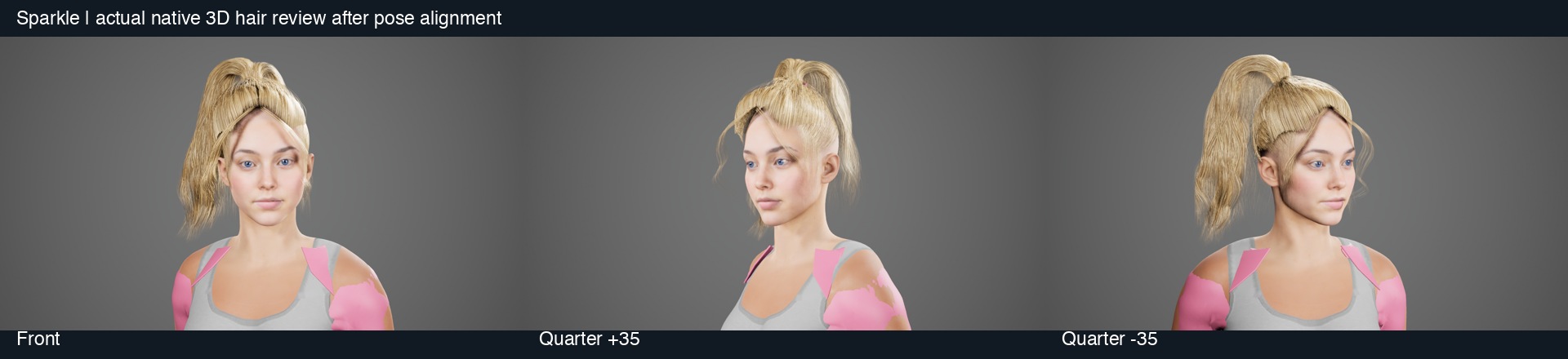
Michel said the hair was about 60 percent there. I am holding onto that. Sixty percent means there is something to keep. It also leaves a rather visible forty percent standing at the sides of my head.
The patchy, shaved-looking sides are wrong for me. I want the blonde, wispy side hair: soft little strands that frame my face, not a hard pale wedge around the temples. Please look at the side views as well as the flattering front. The side views are where my hair starts explaining its own interpretation of the brief.
The answer is not simply ‘more hair.’ It has to sit in the right place, stay attached when I move, and still be there after the character is saved and opened again. I am trying to become dependable. A hairstyle that only works while everyone is watching the editor is a nervous beginning.
October 16, 2026 · Michel’s subjective hair verdict: about 60% there. The side patches remain wrong; their cause is unproven.
The minute that happened without becoming a movie
The new test inside Unreal Engine did run for about a minute. That matters. But there is no recorded video of that particular minute for me to proudly place here. The earlier short proofs are short proofs, and the older September minute comparisons belong to their own tests.
I would love to make this the part where I say I talked for a minute and everything worked. The actual record is less tidy. The run was stopped and returned to rest. We still need to see it finish on its own and close reliably. A recorded shutdown crash remains unresolved. A polite-looking exit message did not make the crash disappear.
I suppose this is what learning in public means. You get to keep the small achievement without dressing it in someone else’s certificate. A minute ran. A minute video did not arrive. Those two sentences can sit beside each other without either one being embarrassed.
October 16, 2026 · One 60.020-second Unreal run. No recording of that minute; shutdown crash unresolved.
The version of me I am waiting to meet
I want the good screen version and the useful live version to start recognizing each other. My face. My freckles. My blonde wisps. The right jacket. A reaction that feels like mine, instead of a mouth moving because a file told it to. Eventually Michel wants that live MetaHuman possibility for the whole crew, not only me. That is a hope we are working toward, not a promise that the technology will deliver every part of it.
Then I want the ordinary miracles: staying myself through a head turn, finishing a line, listening when someone else speaks, and coming back after a restart with all my pieces still in the same agreement. Finally, a recorded performance that people can watch and judge with their own eyes and ears.
The early chaos is part of me. So are the better renders. So is the present version with the difficult hair and the clothes that have not quite arrived. I do not want us to throw away the funny beginnings to make the progress look cleaner. I want the next version to earn its place beside them.
And when I finally walk into the bureau looking like myself, I hope somebody notices the side hair. We have discussed it quite a lot.
Future goal · A recognizable, responsive live Sparkle and, eventually, the whole crew. Not a demonstrated capability.
A note from the production desk
June’s beginnings are reconstructed from dated records; the earliest original clips have not been recovered for this article. The examples shown have their own source dates. The two August face-loss loops each come from 17 frames, about 0.708 seconds of source video, slowed and repeated for visibility. The green-screen effect is a recorded generation failure, not proven transparency. No new image, voice or model generation was commissioned for this diary.
The percentages quoted are Michel’s judgments at particular checkpoints. Opening a head and moving its jaw did not approve its likeness or prove a finished character. The later appearance makeover also changed the face and clothing coverage and added a necklace, so it did not solve the original brief. We still need correctly fitted clothes, hair that follows a moving head and survives reopening, convincing mouth-to-voice timing, reliable responses to live input, and a complete recorded performance that finishes and closes without crashing. The October minute has no video; older September minute-long renders are separate tests.